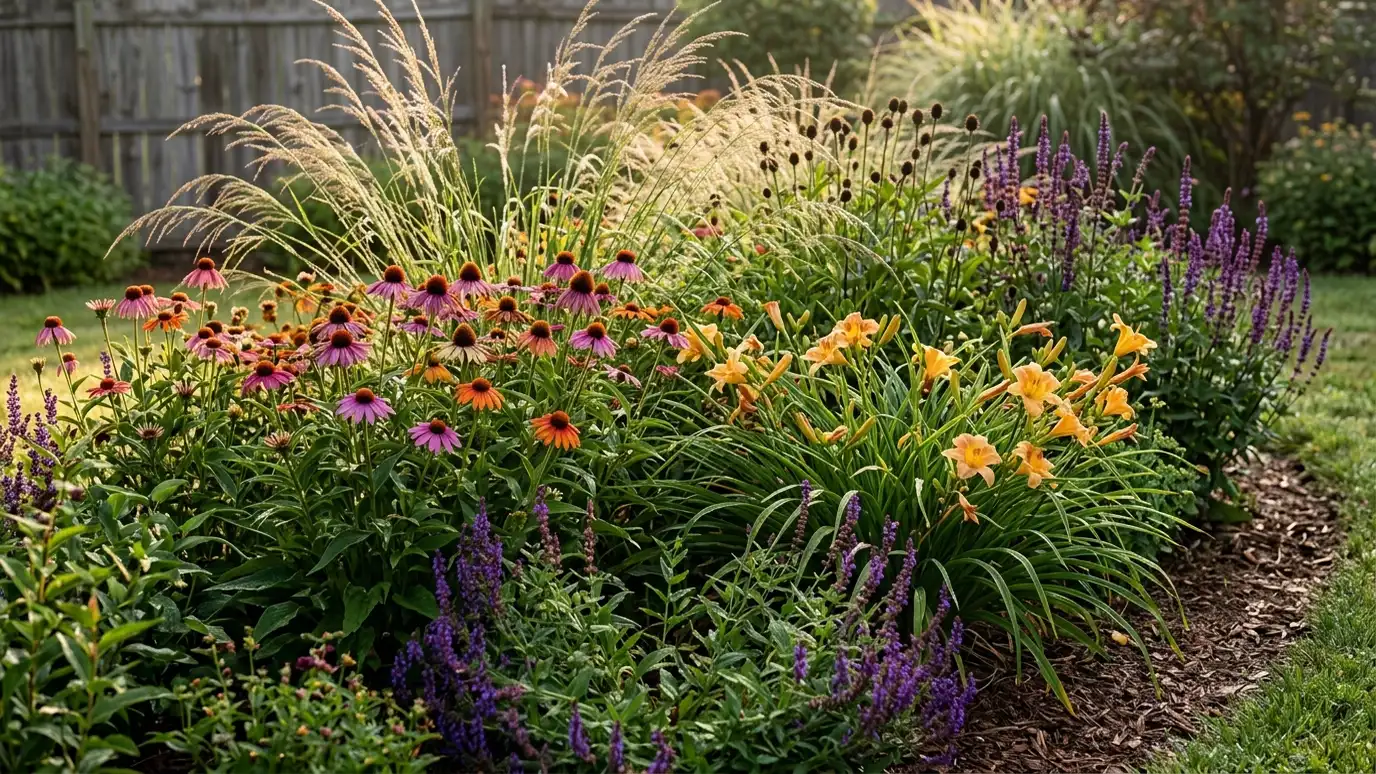
Garden beds filled with perennials, grasses and seasonal color, arranged for bloom through the year and easy care.
A well-planned flower bed gives color for months and gets better each year. Perennials return after winter, grow into fuller clumps and can be divided and shared. The secret is planning: choosing plants that bloom at different times, that handle Nashville heat and humidity and that fit the sun the bed receives. Without a plan, beds peak for two weeks and look empty the rest of the year.
We start with the soil and the light. We loosen the ground, add compost, shape the bed and arrange plants in layers, with tall plants at the back, medium ones in the middle and low edging plants at the front. We mix bloom times so there is something flowering from early spring to first frost, and we add ornamental grasses and evergreen texture for winter. Mulch and edging finish the bed, and we leave you with a simple care guide covering watering, deadheading and dividing. We can also divide and move plants you already own, so a mature bed gets fresh energy without the cost of replacing everything, and we leave a simple seasonal checklist for trimming and feeding.
Plants are chosen so there is color from spring bulbs to fall asters.
Compost and bed preparation give roots room to grow and hold moisture.
Height, texture and color are arranged so the bed looks full and natural.
You receive a simple plan for watering, trimming and dividing.
Drag the handle to compare.
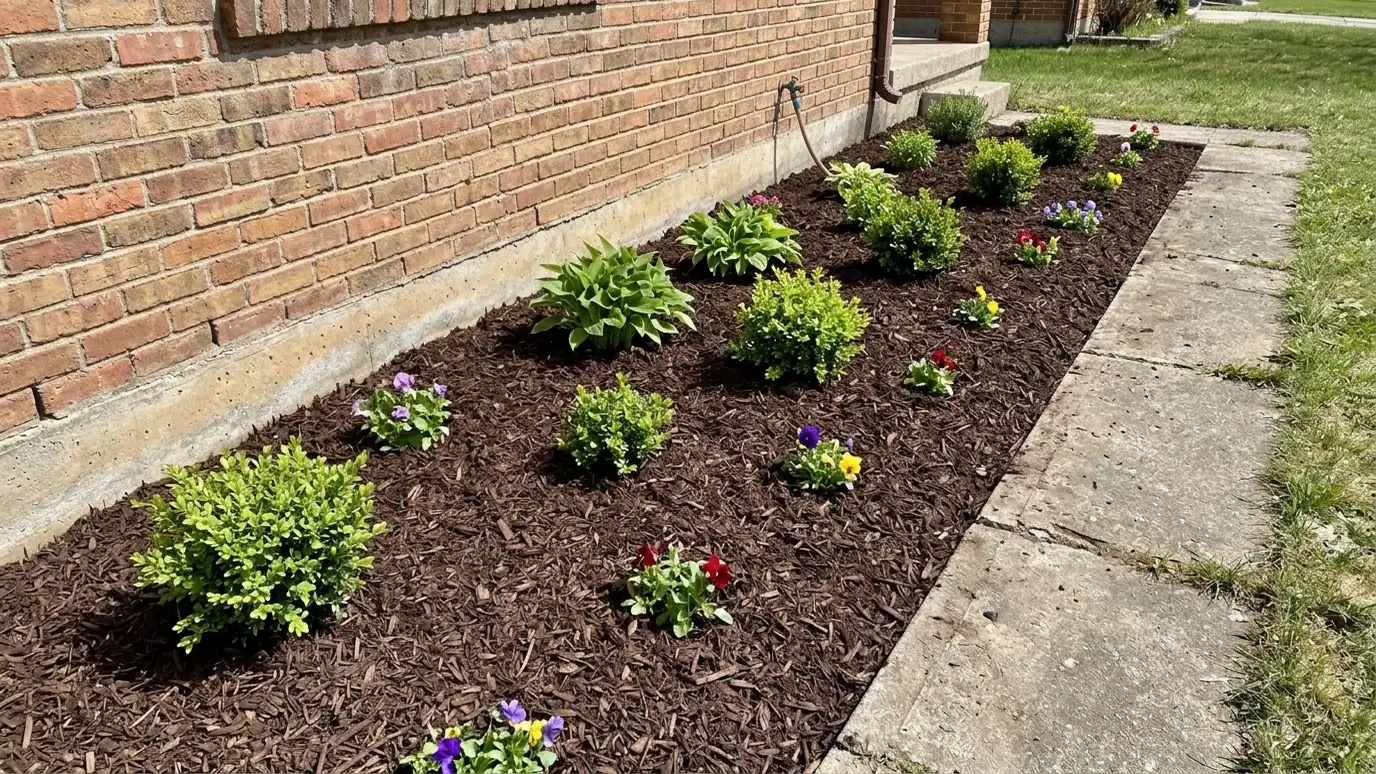
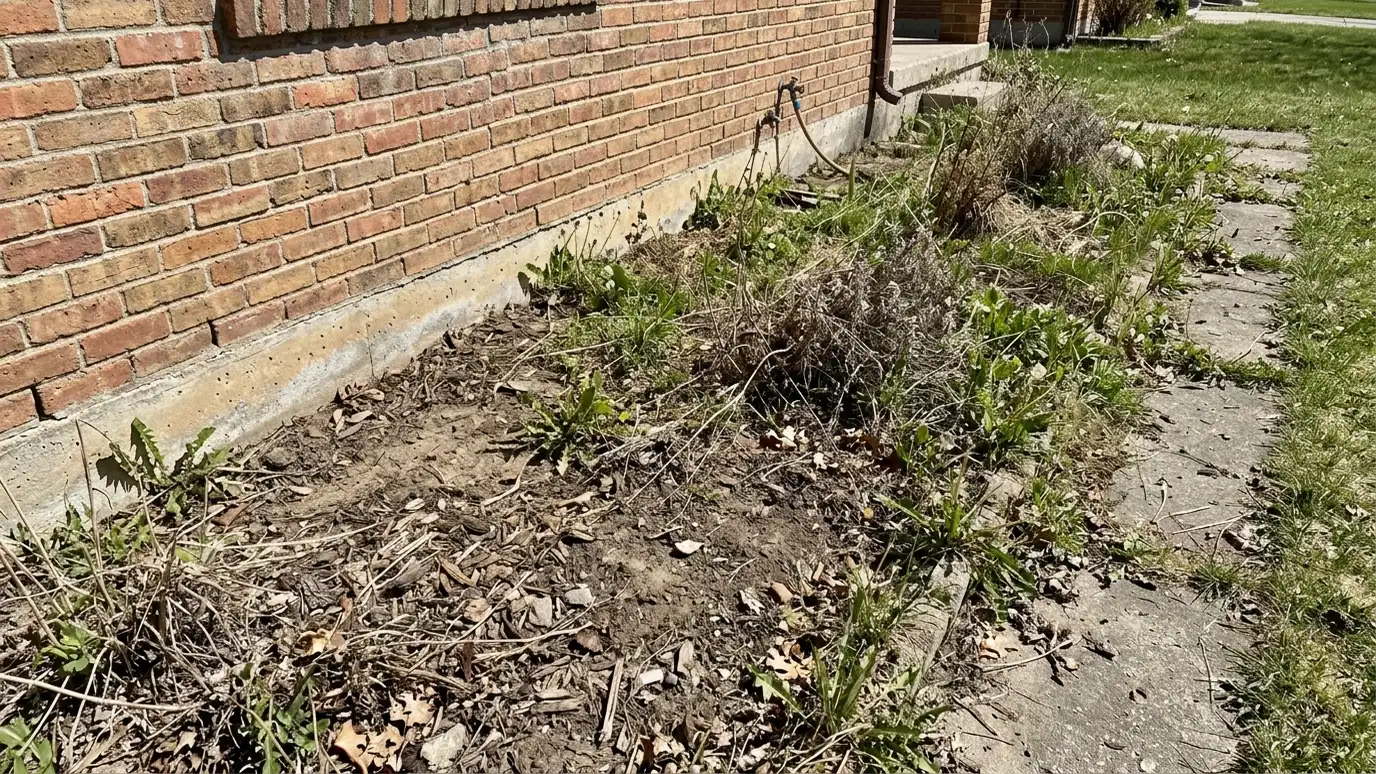 BeforeAfter
Spring to fall.
Full and natural.
Fits our summers.
Deep roots, less watering.
Bees and butterflies.
Easy upkeep.
Every topic has its own page with what to expect and how we approach it.
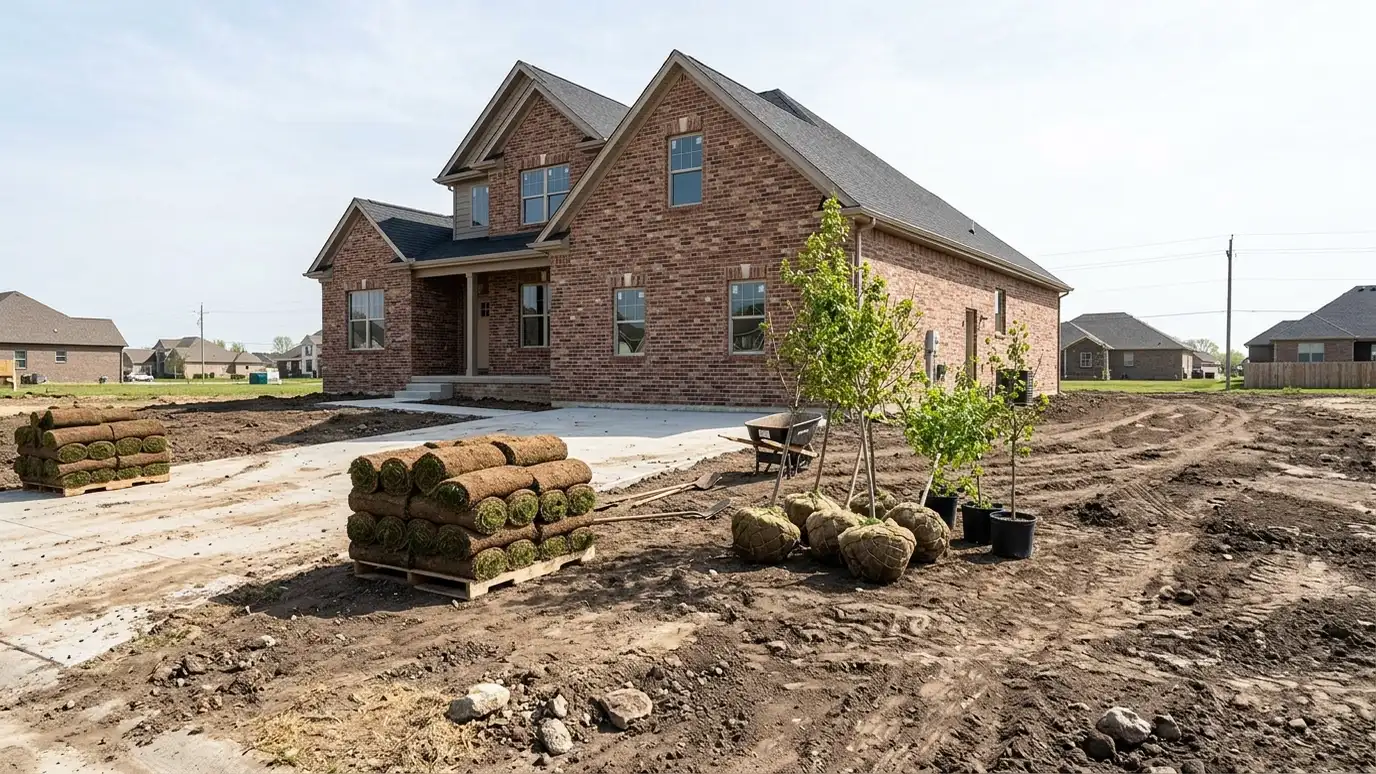 Site situationNew Construction YardsA new build starts with bare, compacted soil. Here is how to plan grading, drainage, sod and planting…Learn more
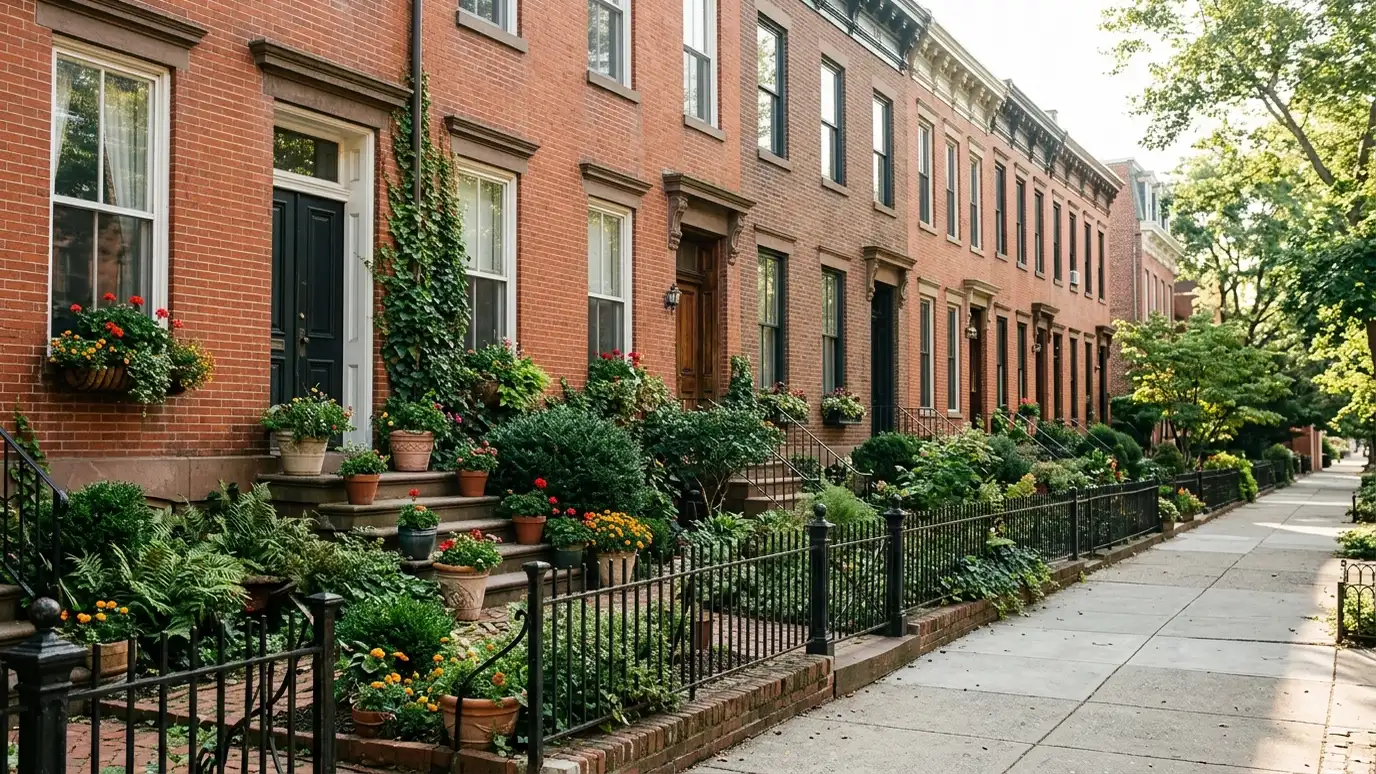 Site situationSmall Yards and TownhomesSmall spaces need smart design. Here is how layers, containers, vertical elements and compact plants make a small…Learn more
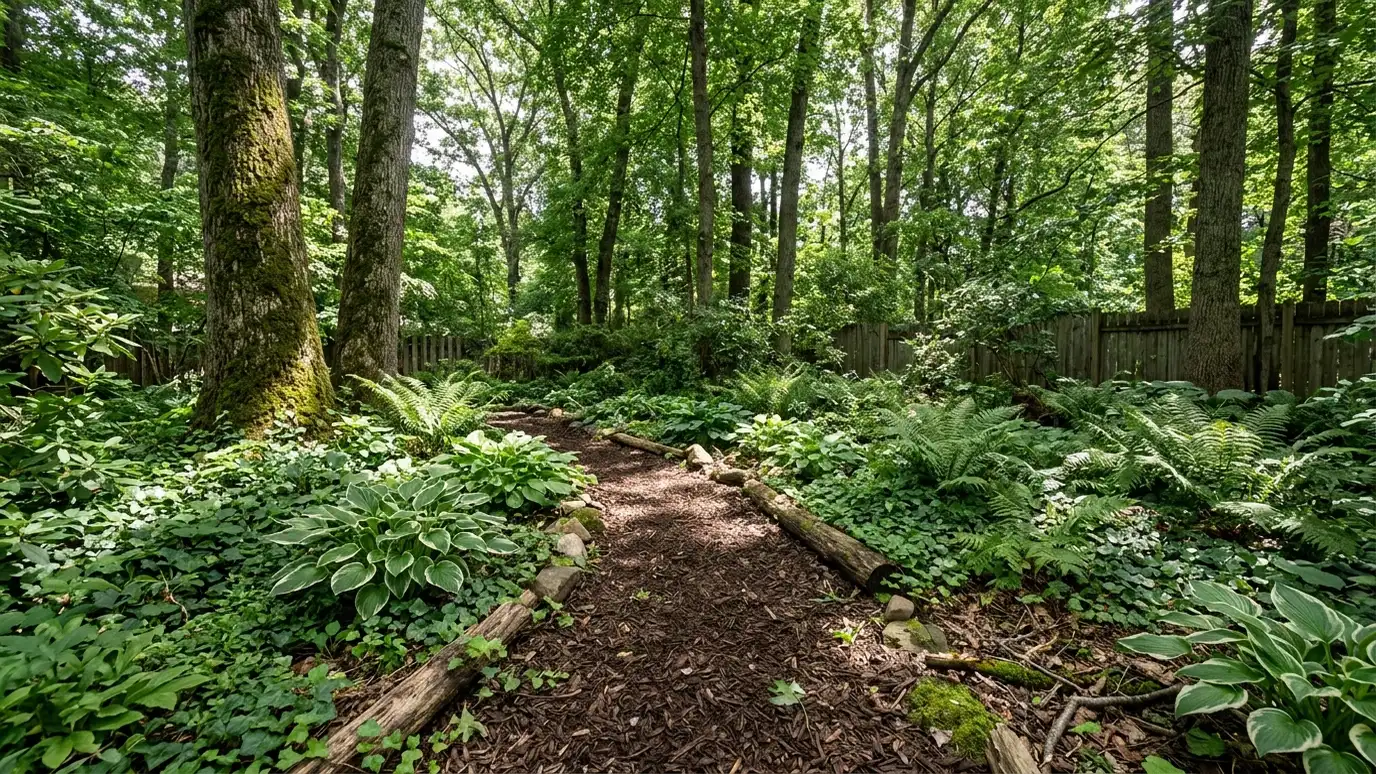 Site situationShaded and Wooded LotsTall trees give shade but starve lawns and sun-lovers. Here is how to design a landscape that thrives…Learn more
Enter bed size, plant type and spacing to see how many plants, how much mulch and how much water to plan for.
You tell us about your yard and what you want, new landscaping, a lawn fix or a patio, and we set a visit that fits your day.
We walk the property, measure the areas and check sun, shade, soil, drainage and access, noting existing plants and anything worth keeping.
We explain your options for plants, materials and layout, sketch the design and give you a written scope with clear timing and pricing.
We arrange for underground utilities to be located, protect the house and lawn, remove what must go and rebuild the soil and base.
We install plants, sod, stone and lighting with the crew on site from the first delivery to the last load of mulch, keeping the site tidy as we go.
We walk you through watering and care, leave a simple guide, clean up and set a reminder for your first-season check.
Coneflower, black-eyed Susan, salvia, daylily and sedum handle our heat well.
Most beds fill in over two to three seasons.
Basic watering, deadheading and an occasional division are usually enough.
Yes. Hosta, astilbe, fern and hellebore thrive in shade.
Some plants resist deer better. We choose resistant plants where deer are a problem.
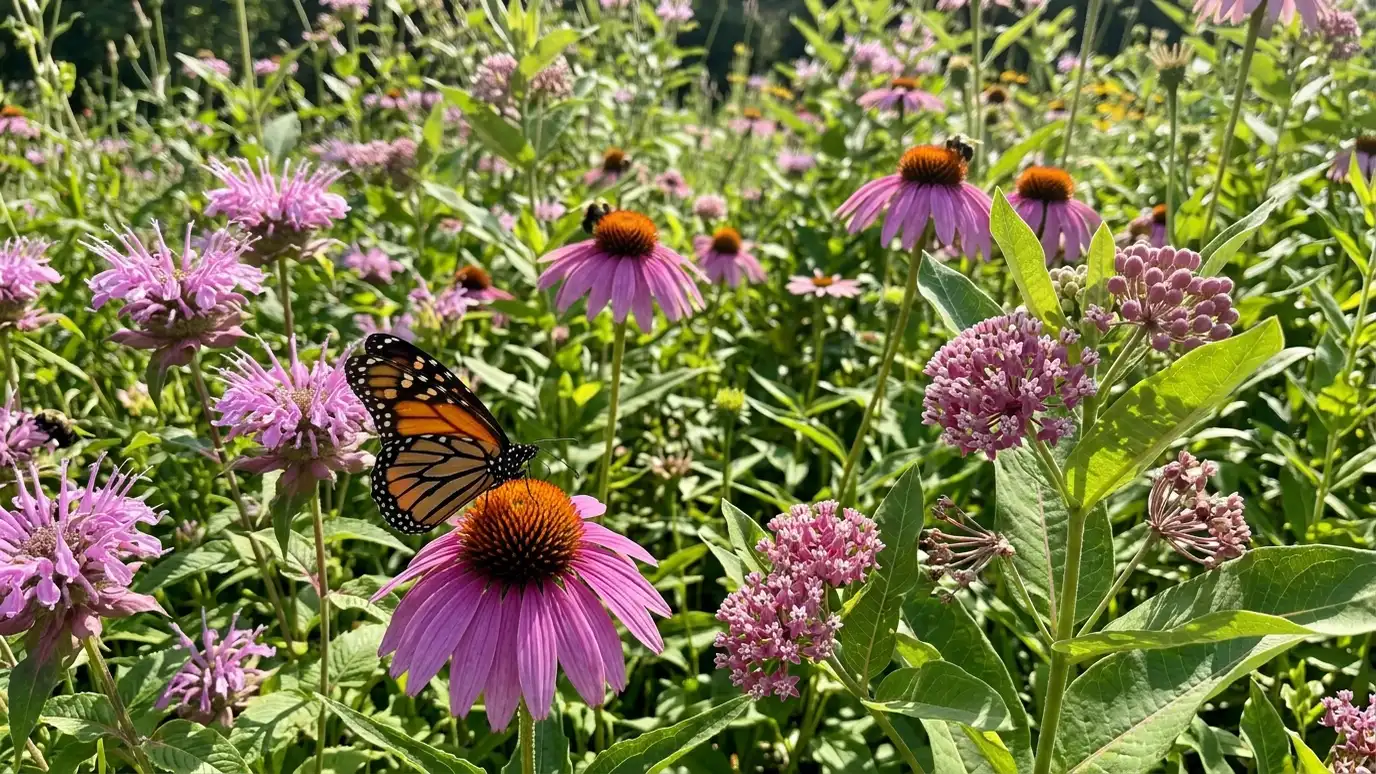 Native and Pollinator GardensGardens of Tennessee native plants that feed bees and butterflies, thrive with less water and bring wildlife to…Explore
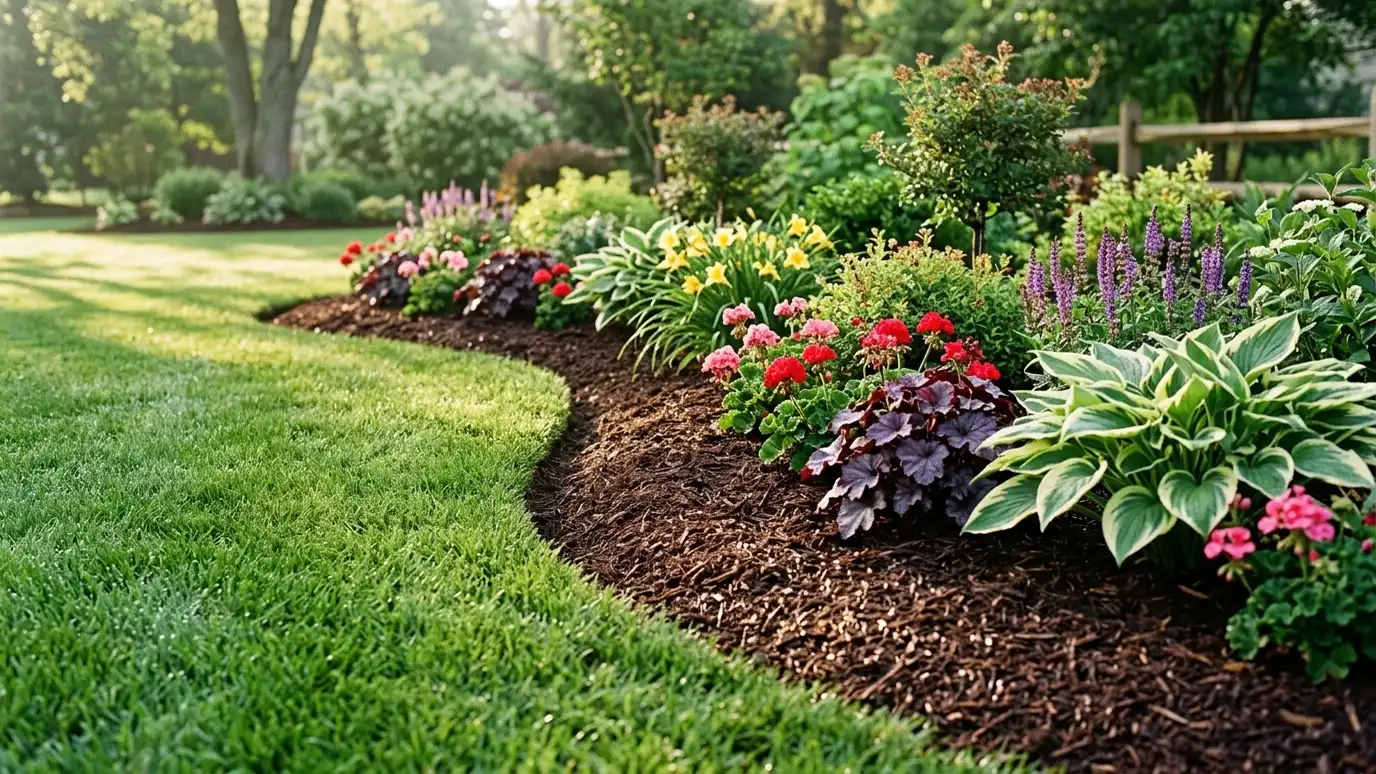 Mulching and Flower BedsFresh mulch, crisp edges and new or renewed flower beds that hold moisture, stop weeds and make plants…Explore
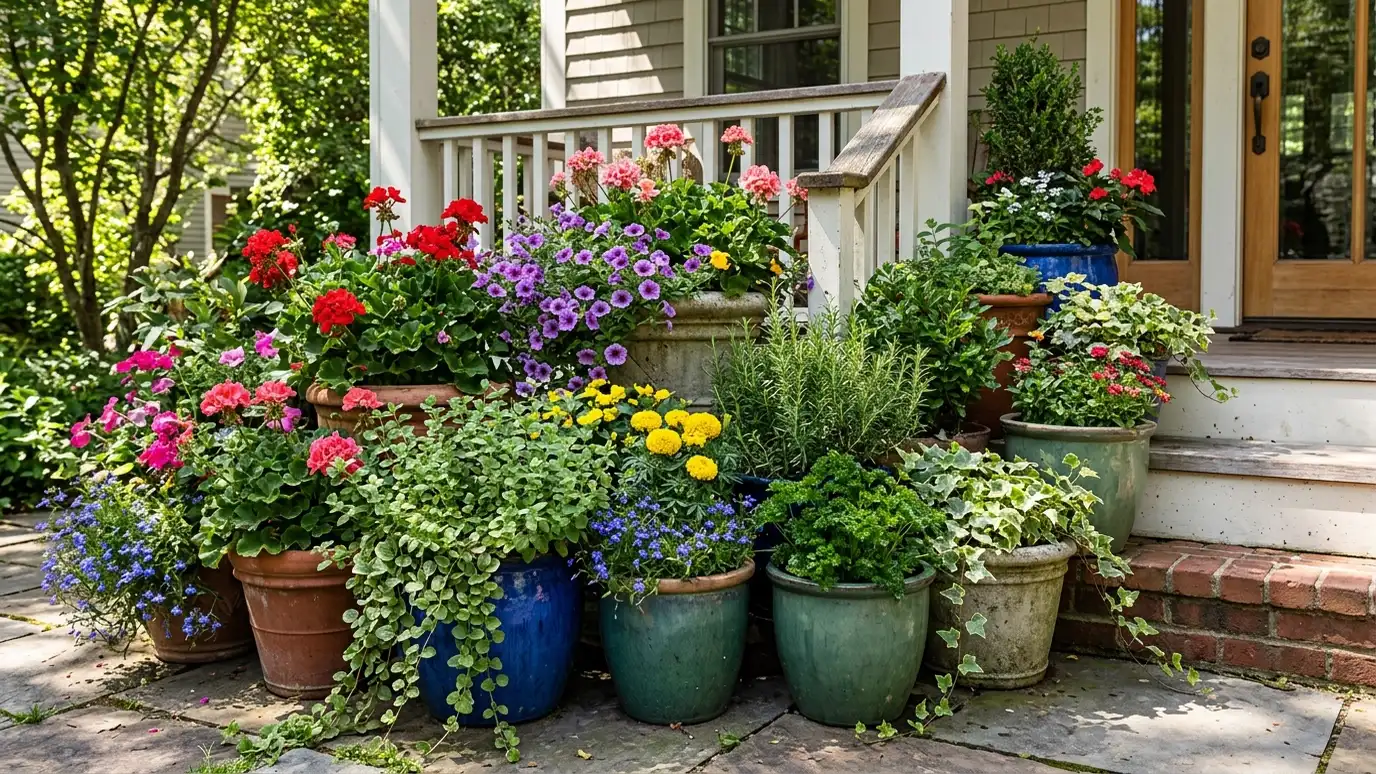 Container Gardens and PlantersPots, planters and raised beds filled with seasonal color, herbs and vegetables for porches, patios and small spaces.Explore
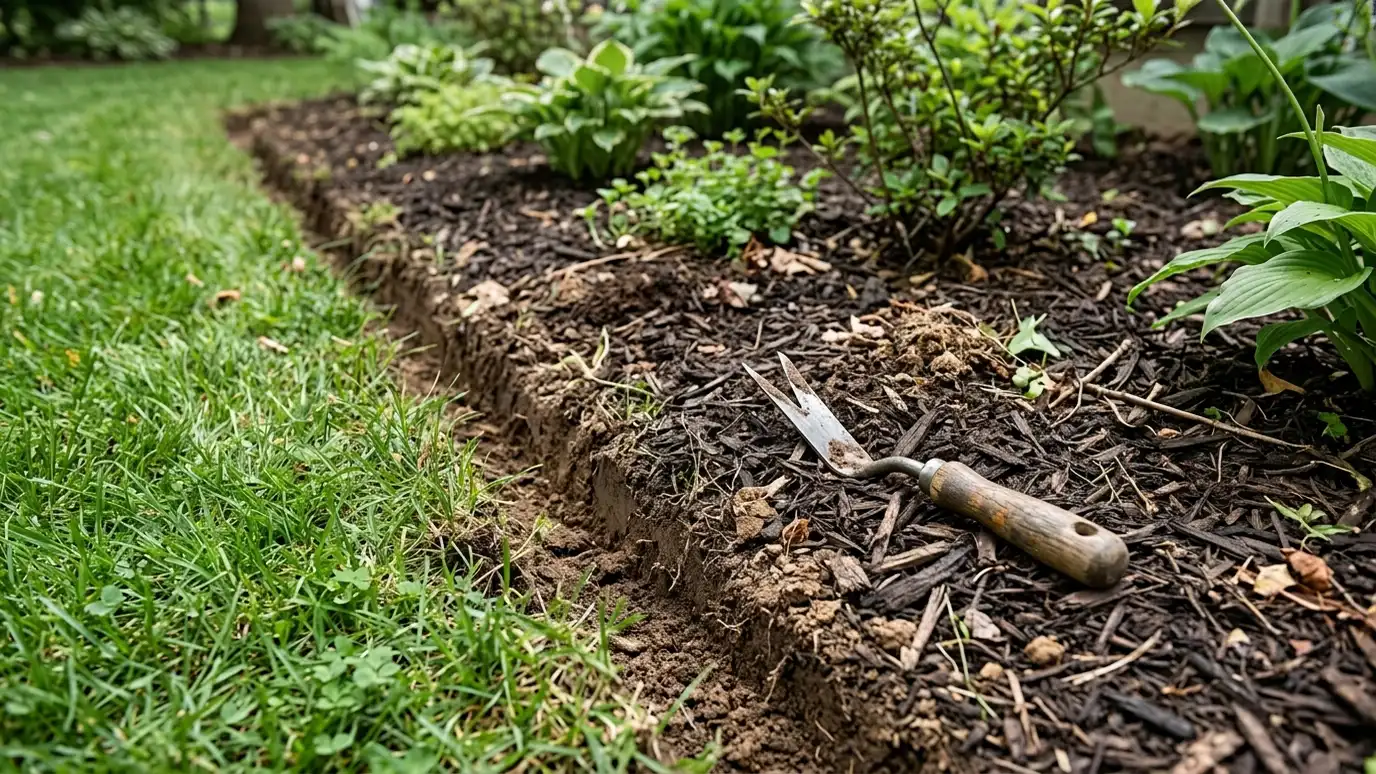 Bed Edging and Weed ControlClean bed lines, weeding and pre-emergent treatments that keep landscape beds tidy and free of weeds all season.Explore
Tell us about the project and we will call you back to talk it through.
Or call (615) 357-7797 to talk now.