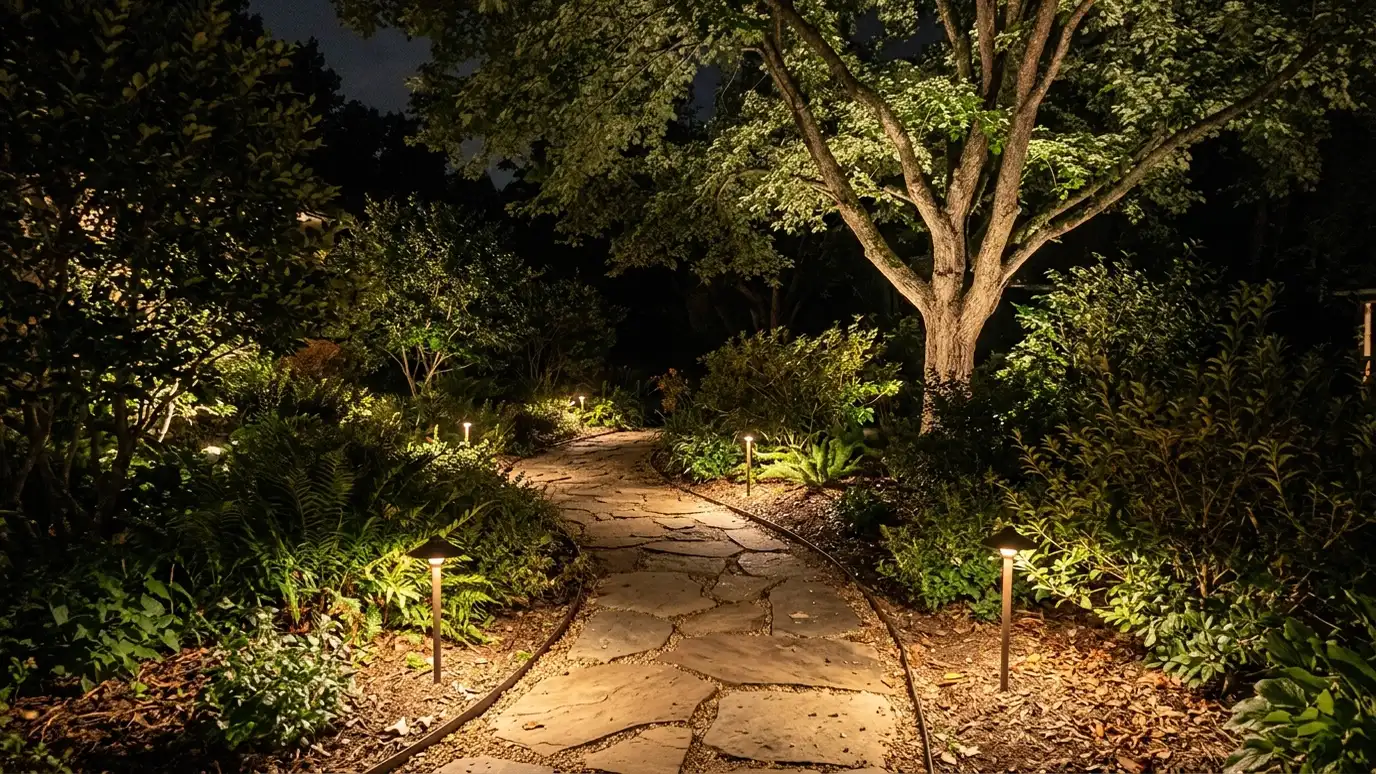
Walk the yard at night
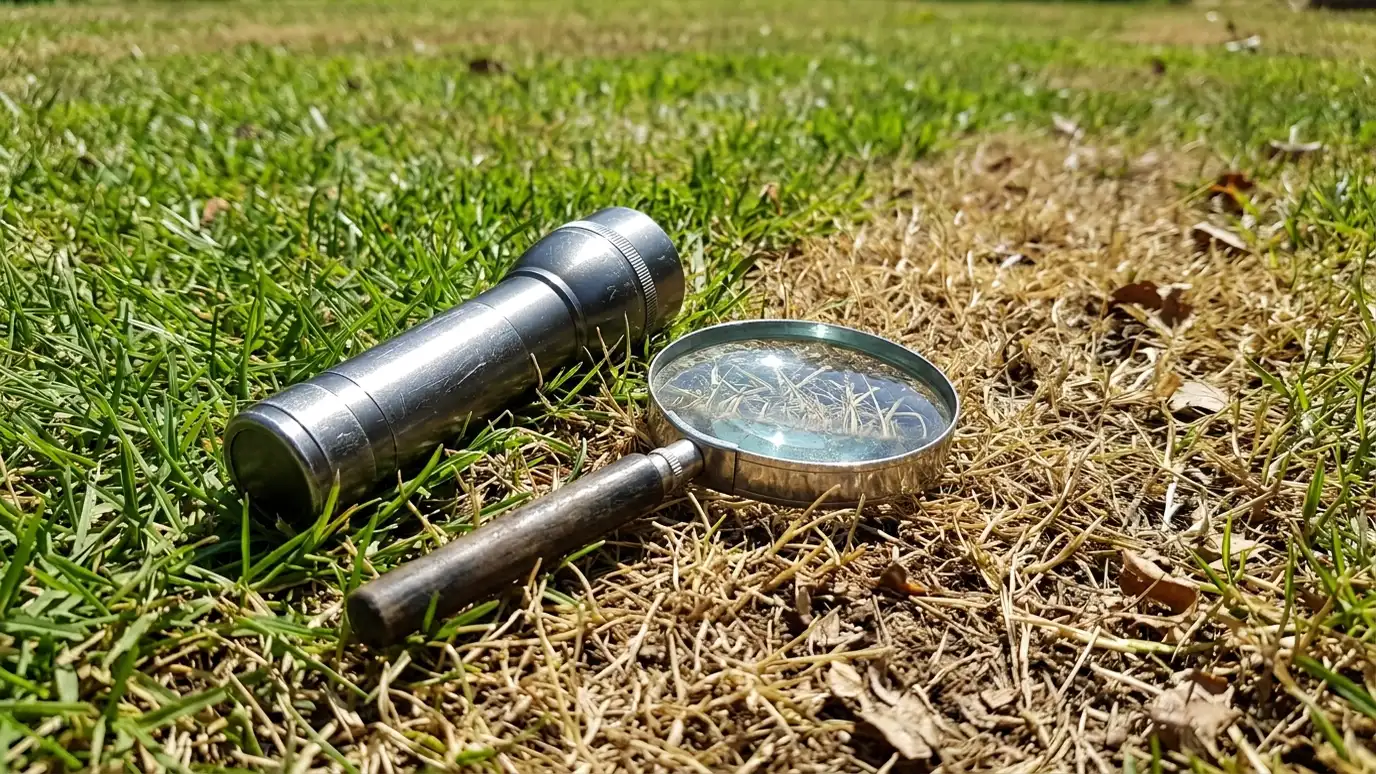
Go out after dark with a flashlight and note where you need light for safety and where you want drama. Look from windows, patios and the street.
Mark steps, walks, entries and features.
Think in layers
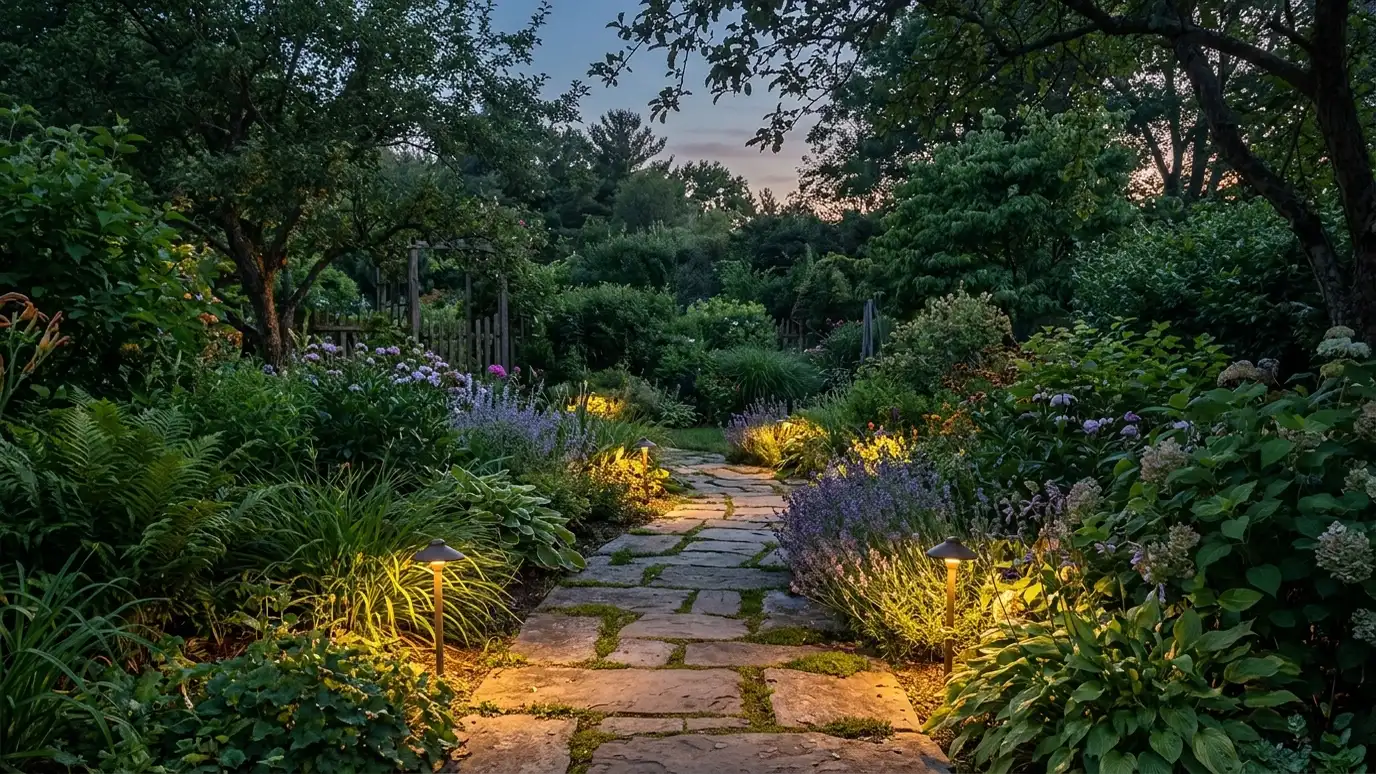
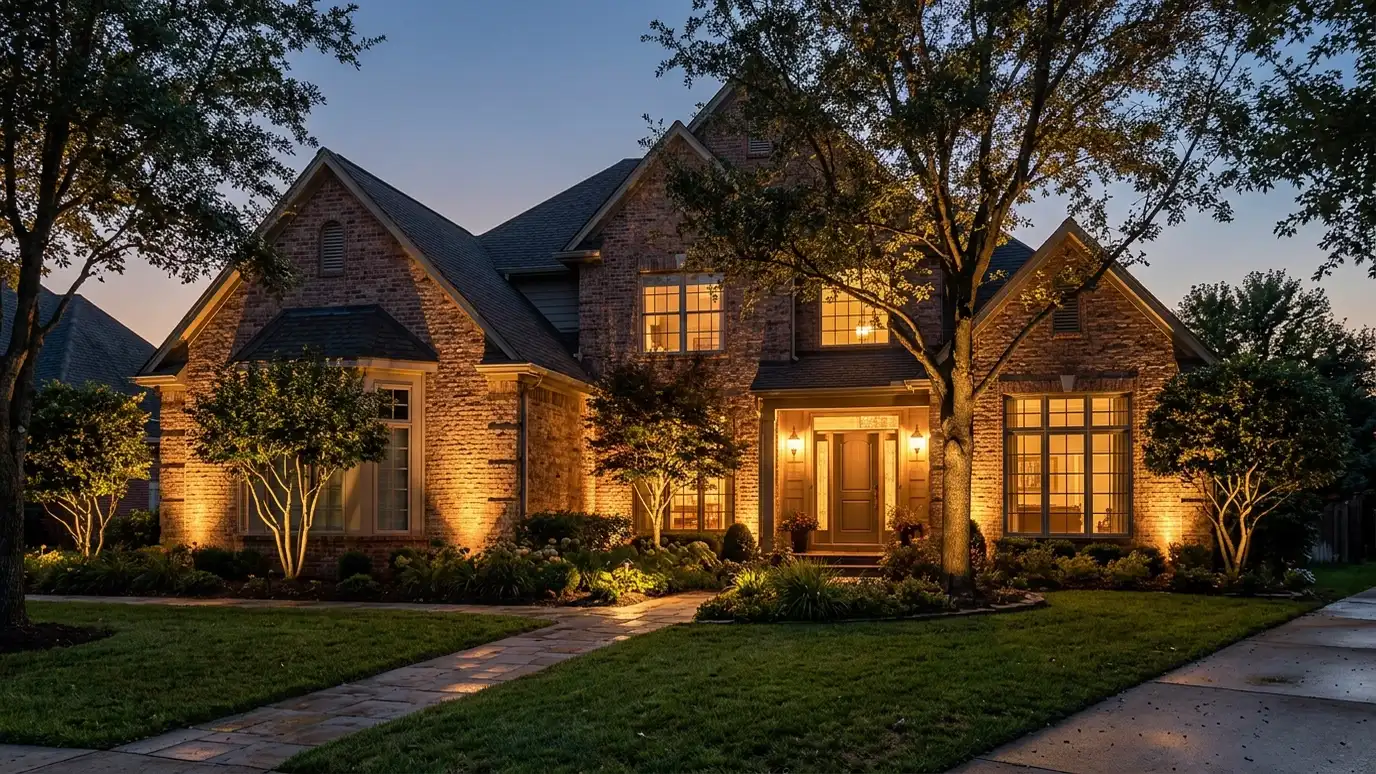
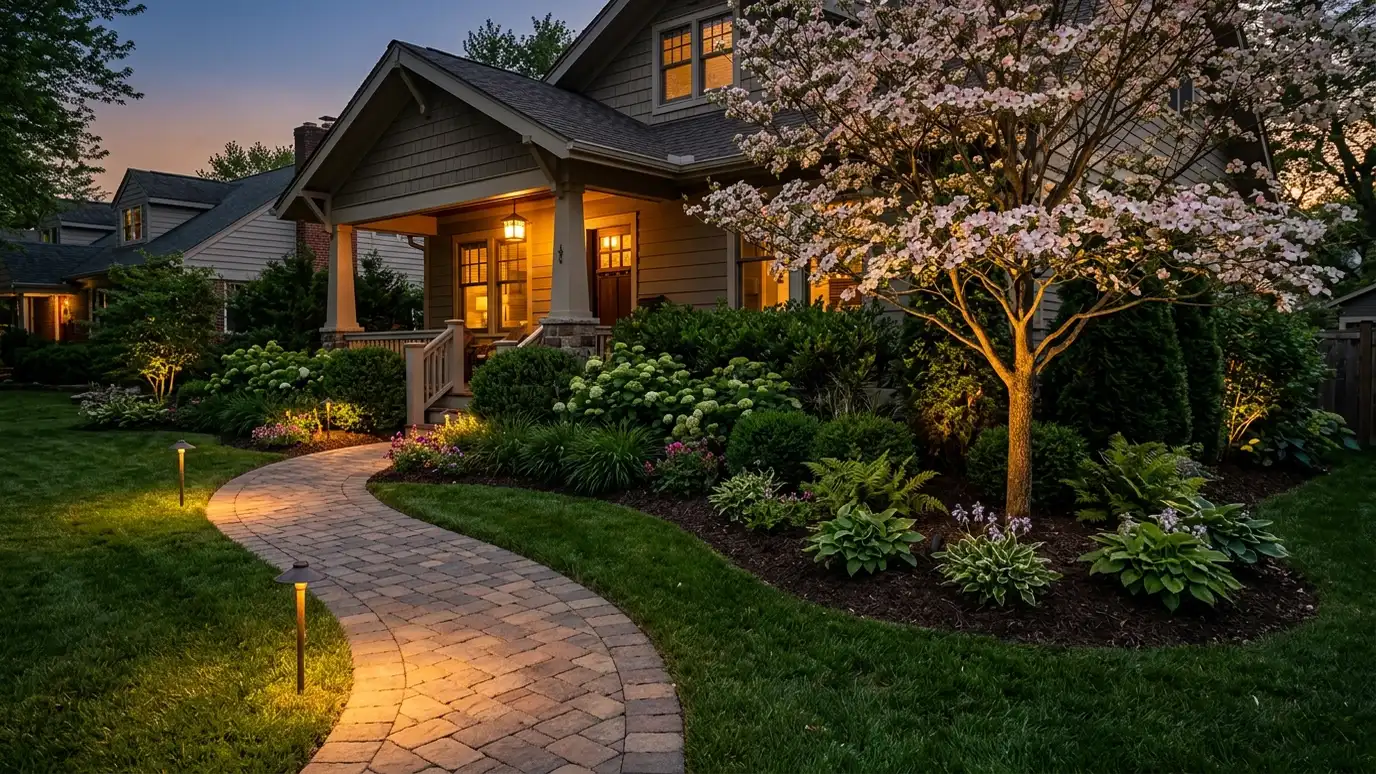
Path lights guide, uplights add drama, downlights from trees soften and accent lights highlight details. Use a few fixtures well rather than many poorly placed.
Keep light levels gentle.
Choose warm LEDs
A color temperature near 2700 kelvin flatters brick and foliage. LEDs use little power and last years. Choose quality fixtures with brass, copper or good-grade aluminum.
Avoid low-grade plastic that fades.
Plan wiring and power
A low-voltage system is safe and expandable. Size the transformer with room to grow. Bury wire at a safe depth and protect connections.
Plan outlets and conduit before hardscape goes in.
Add controls
Photocells, timers and smart controllers make the lights run themselves. Use zones to turn areas on and off separately.
Add motion sensors for security areas.
Avoid common mistakes
Too many lights, glare, hot spots and visible fixtures spoil the effect. Aim lights after dark and adjust as plants grow.
Review the system after the first season.
Maintenance and growth
Check fixtures twice a year, wipe lenses, trim plants that block light and adjust aiming. Replace failed lamps and check connections after heavy rain.
As trees and shrubs grow, raise fixtures and move lights so the effect stays natural.
Light the places people walk first, then the features worth seeing, with warm LEDs and controls that run themselves.