Drought stress
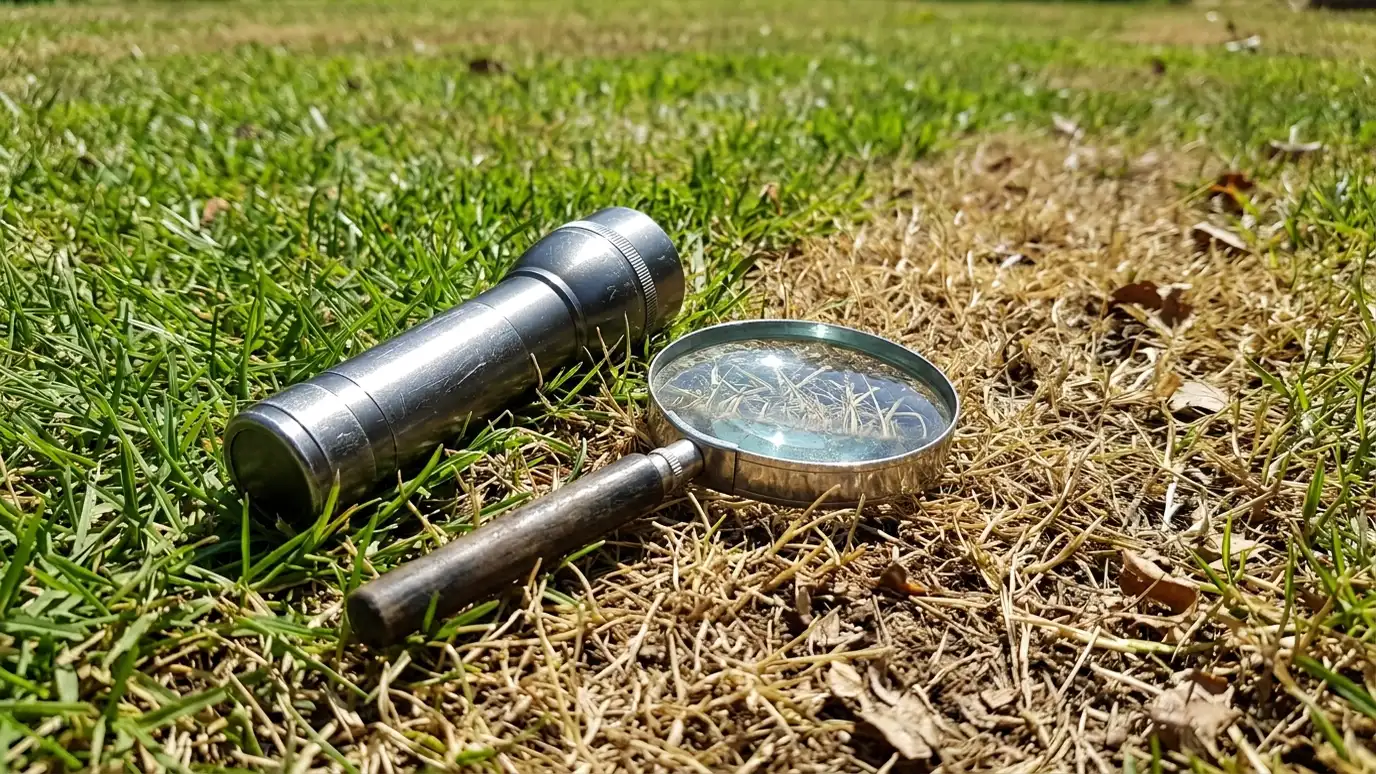
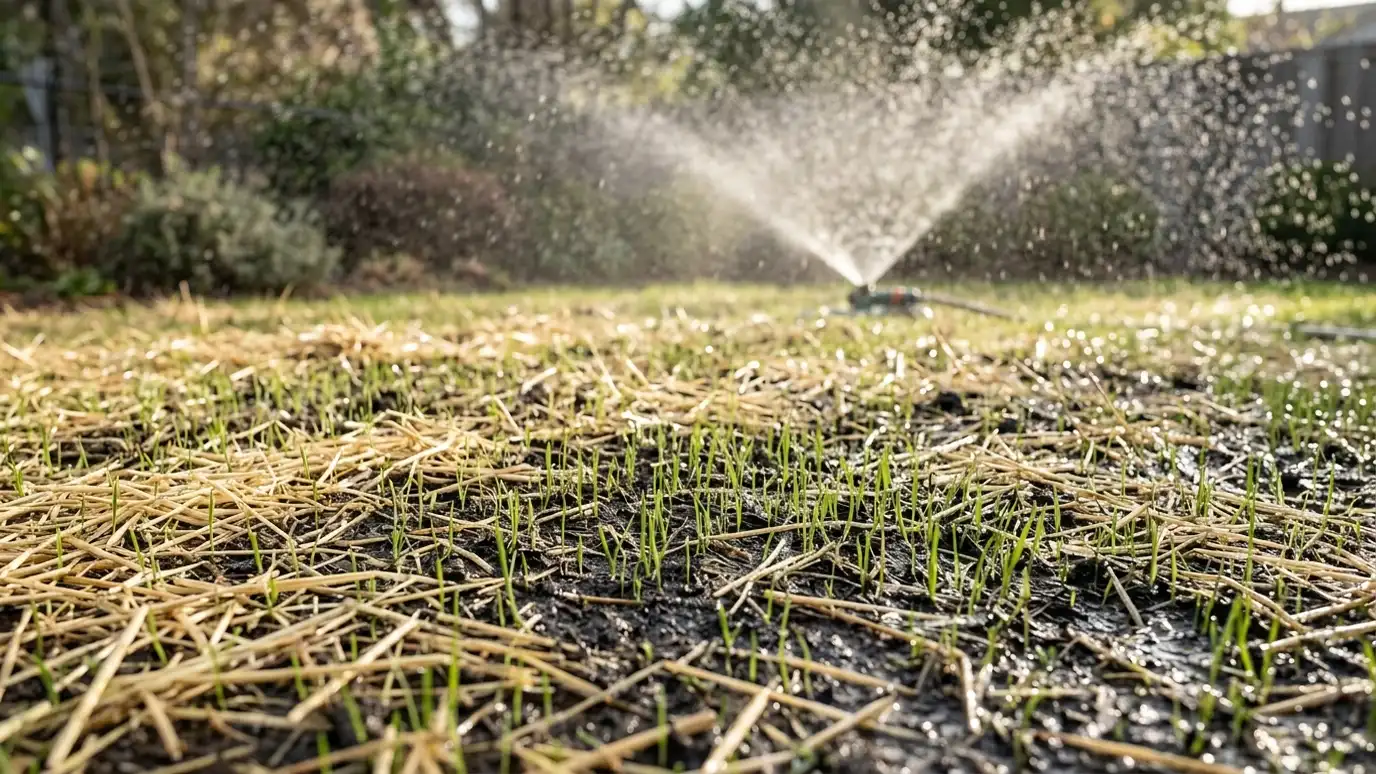
Grass turns blue-gray, then tan, and footprints stay. It usually shows in the sunniest, driest areas first. Deep watering often brings it back.
Fescue may go semi-dormant in summer and recover in fall.
Brown patch and disease
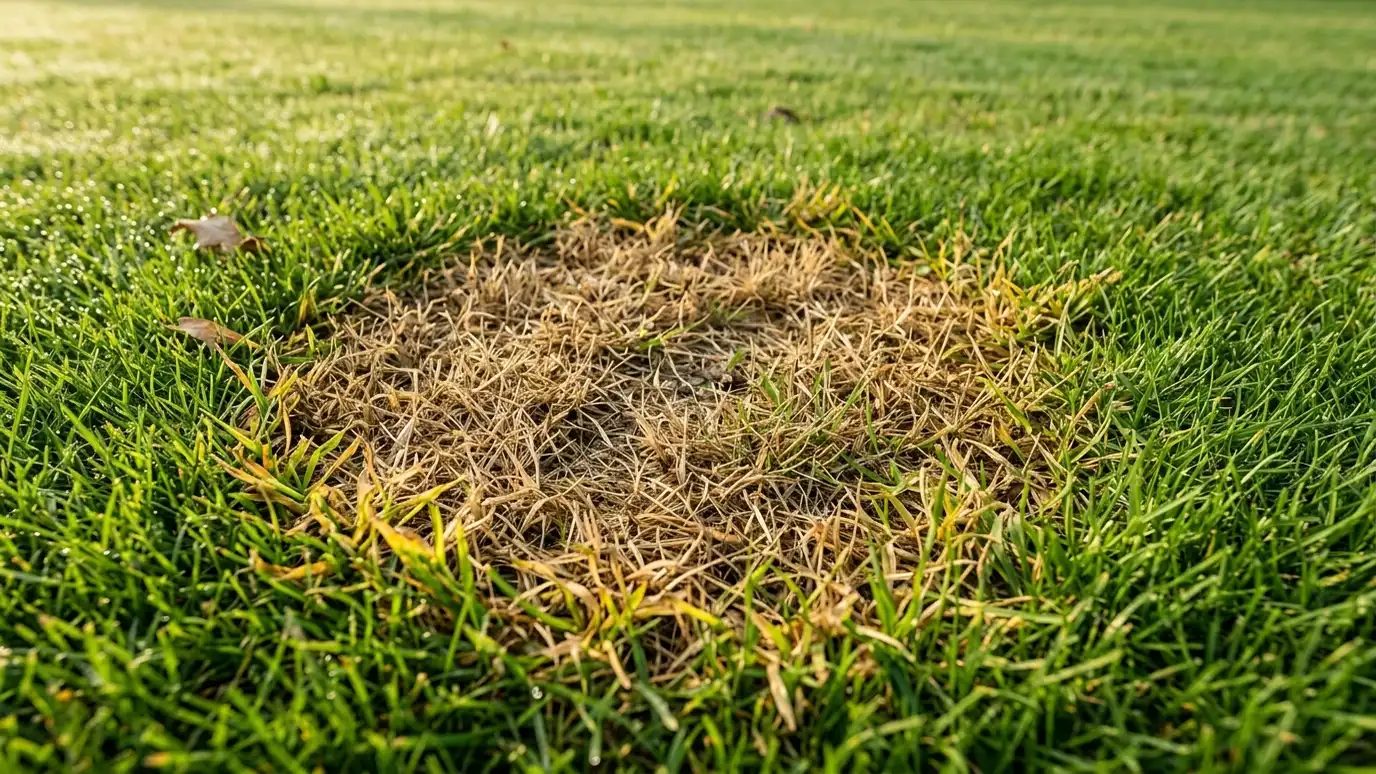
Circles or irregular patches with a darker edge, often after warm humid nights, suggest fungus. Water early and avoid evening watering. Fungicide can help.
Improve airflow and reduce thatch.
Grubs and insects
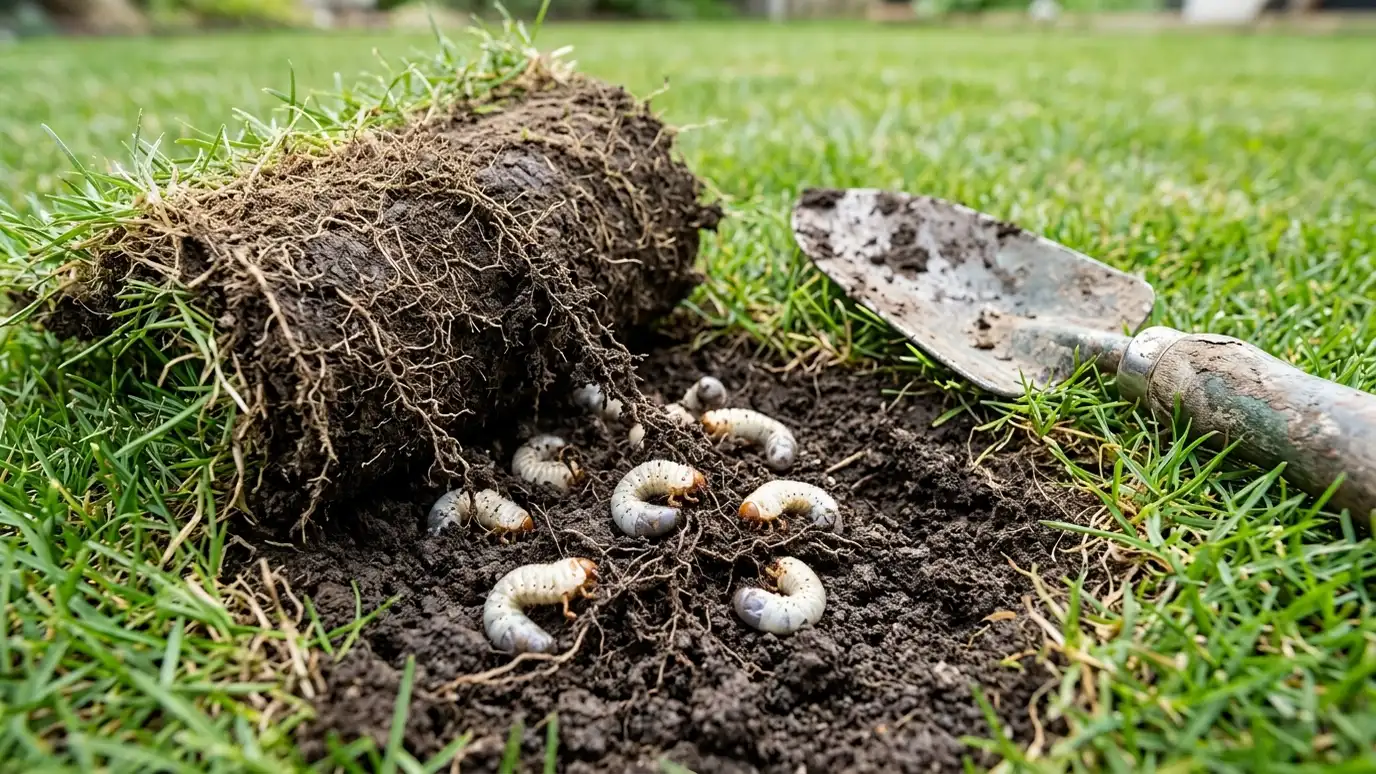
If turf lifts like a carpet and you see white C-shaped larvae, it is grubs. Treat promptly. Chinch bugs and armyworms cause irregular dead patches.
Dig a small square of sod to check.
Shade and roots
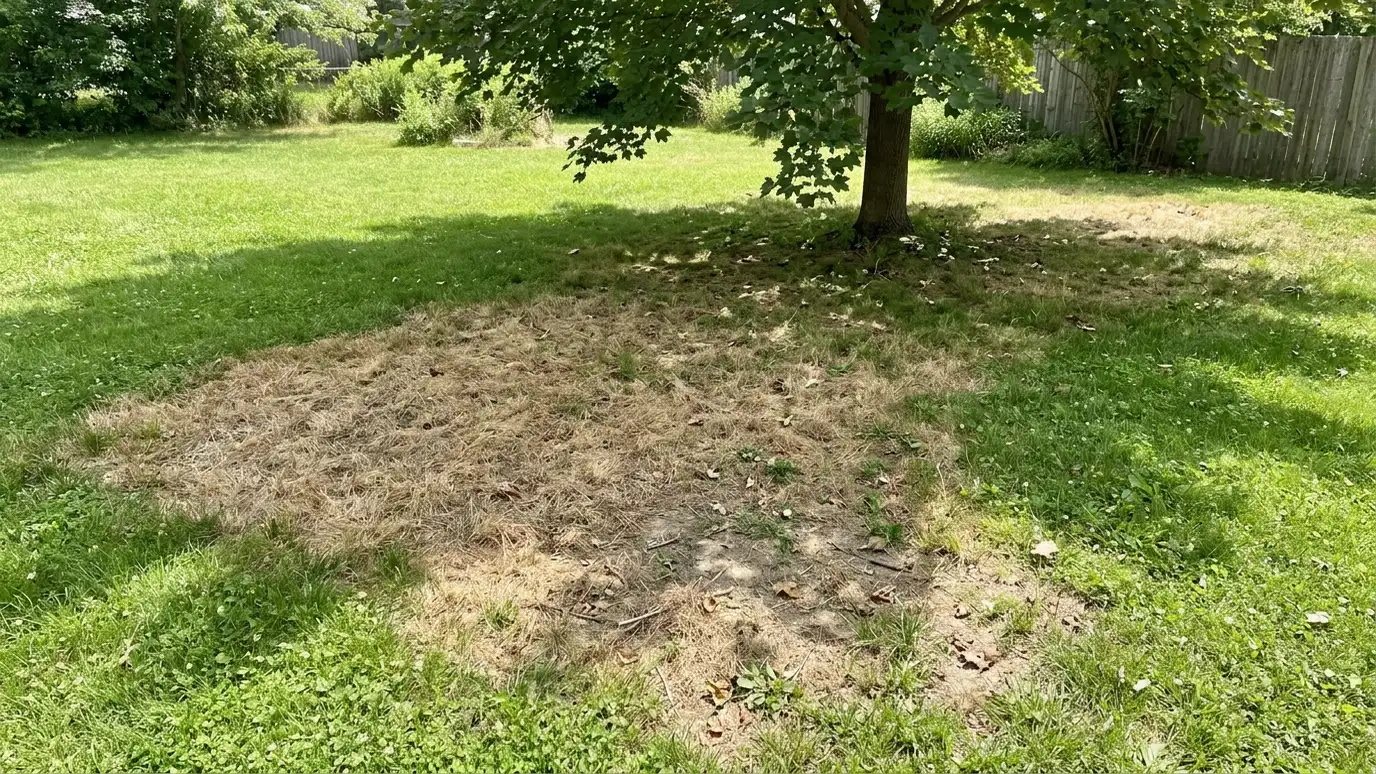
Thin grass under trees is usually a light and root competition problem. Choose shade-tolerant grass, thin the canopy and consider groundcovers.
Do not keep reseeding the same shady spot.
Compaction and poor soil
Hard, clay-heavy soil prevents roots from growing. Aeration, compost and overseeding can restore thin areas.
Test soil to check pH and nutrients.
Pets and mowing
Dog urine burns spots with a green ring around them. Mowing too short or with dull blades weakens grass.
Raise the mowing height and sharpen blades.
A simple diagnosis routine
Walk the lawn and look at the pattern. Follow with a tug test for grubs, a screwdriver test for compaction and a look at the blades for lesions. Take photos and note the dates.
If you are still unsure, ask for a visit. Many problems have more than one cause, and a combined plan works best.
Find the cause before you treat, because the wrong fix wastes a season, and use our problem checker to narrow it down.