Find where the water comes from
Watch the yard during a heavy rain. Note where water enters, where it pools and where it leaves. Roof downspouts, neighbors’ yards, slopes and compacted clay are common sources.
Take photos so you can compare after any fix.
Start with the roof
Downspouts that dump next to the foundation overload the soil. Extend them with solid pipe to a safe outlet at least ten feet from the house, or connect them to buried lines.
Clean gutters so they do not overflow.
Regrade the ground
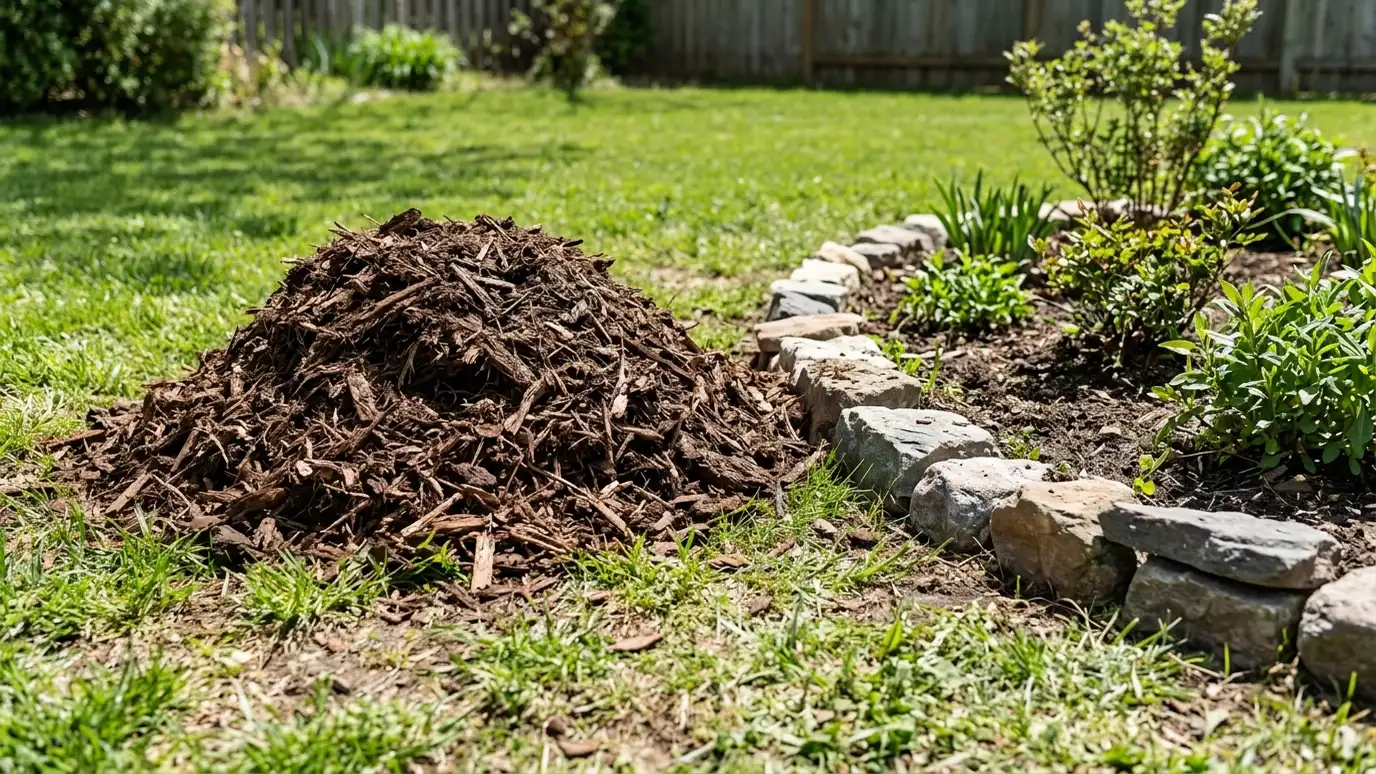
Soil near the house should slope away at about one inch per foot for the first several feet. Low spots can be filled and shaped. Grading is often the lowest-cost fix.
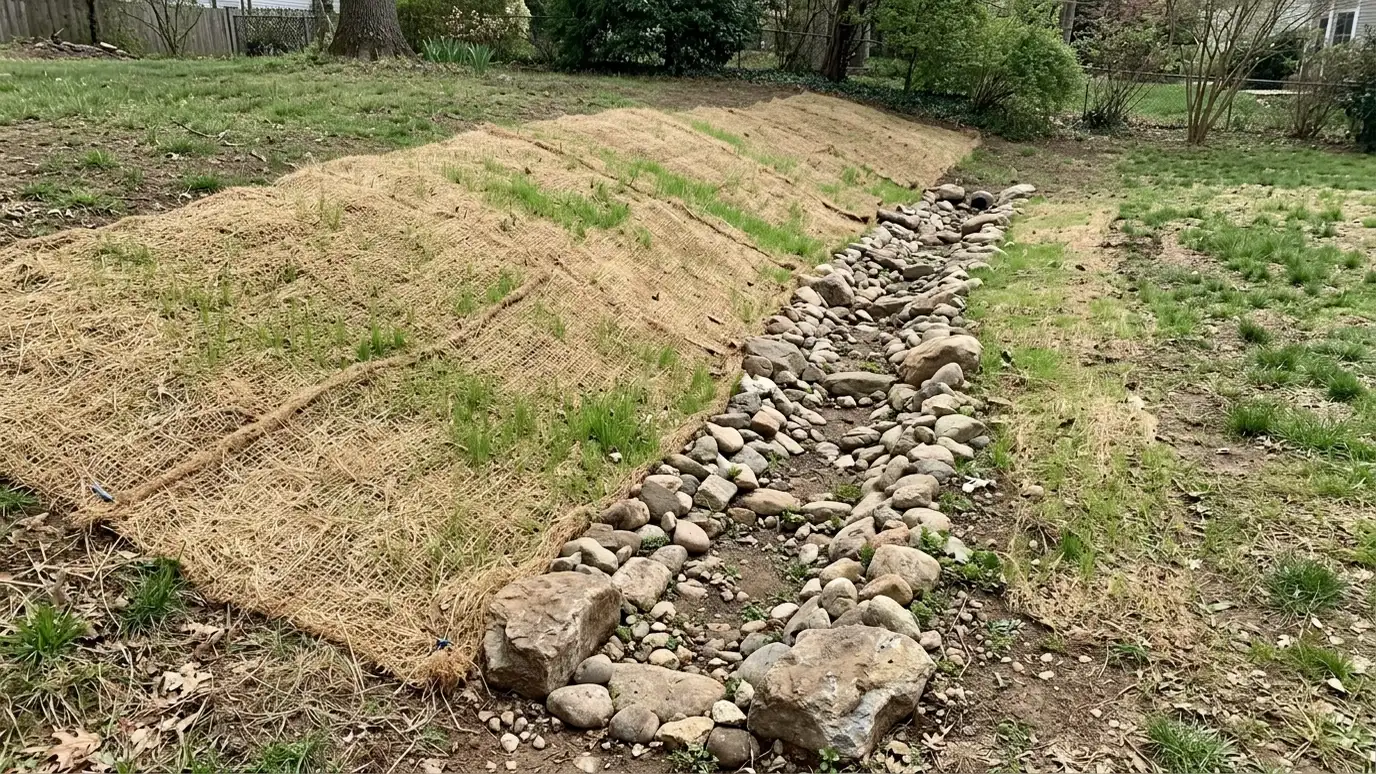
Swales carry water gently across a lawn.
Install drains
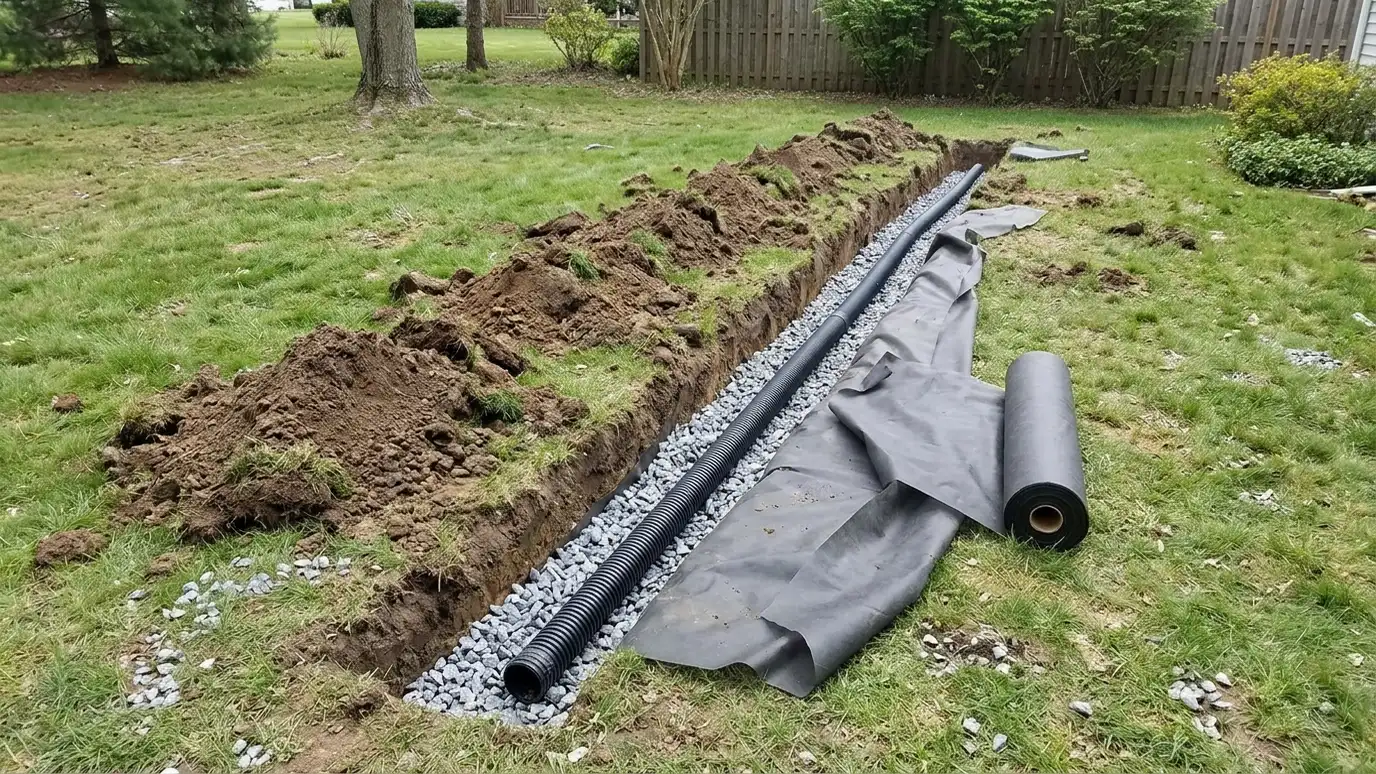
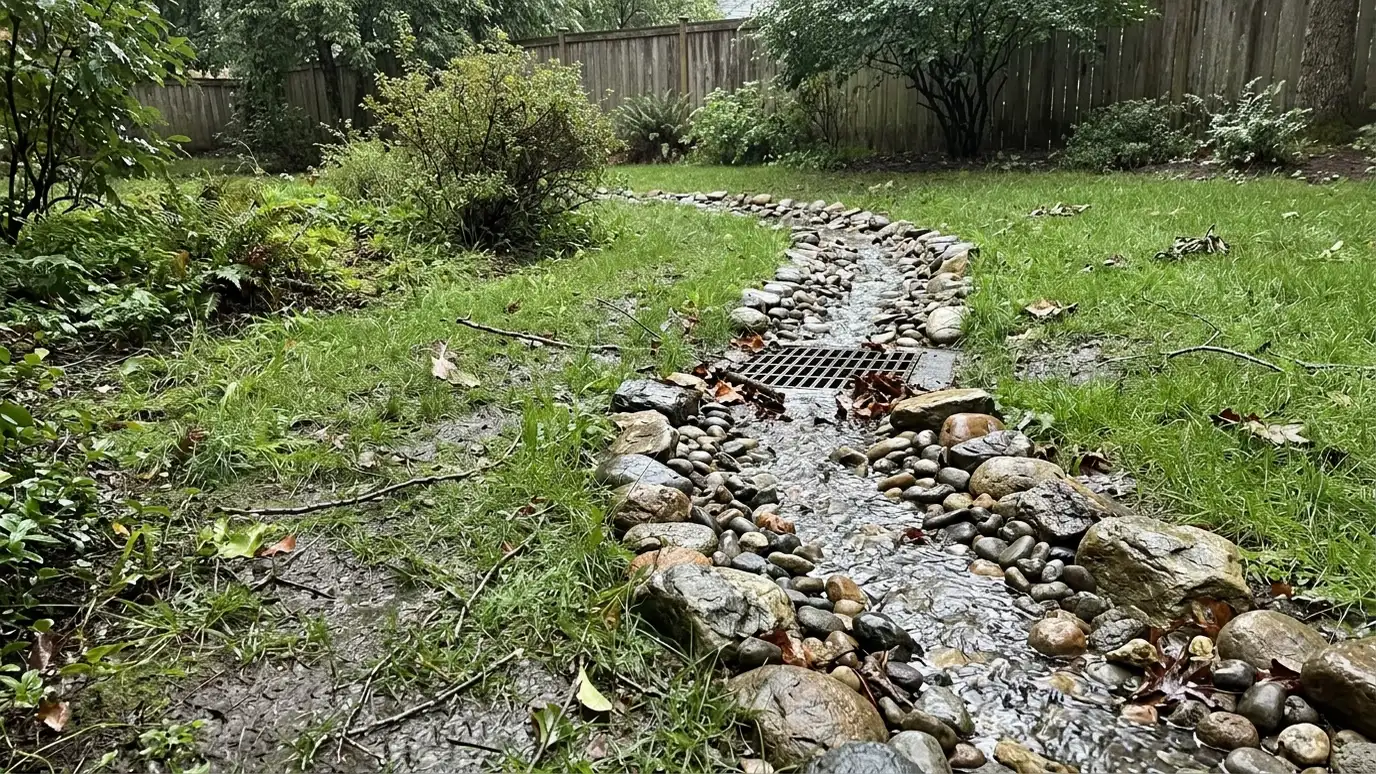
A French drain with perforated pipe and gravel intercepts groundwater. A catch basin collects surface water at a low point. Pipes must slope to a safe outlet.
Check that outlets stay clear.
Use plants and features
Rain gardens and dry creek beds turn runoff into a feature. Wet-tolerant plants help dry soggy areas. Deep-rooted grasses improve infiltration.
Aeration and compost help clay absorb water.
Know when to call a pro
If water enters the house or crawl space, if the slope is steep or if neighbors’ runoff is involved, get professional help. Some solutions need permits or engineering.
We start with a site evaluation and a written plan.
What to do before the next storm
Clear gutters and downspouts, clear debris from any existing drains and mark low spots with flags. Photograph the yard during rain, since flowing water is the clearest evidence for a contractor.
If you are planning other work, such as a patio or a wall, fix drainage first so the new work is protected.
Fix the roof water first, regrade second and add drains where gravity alone cannot do the job.